Results for 'rāua'
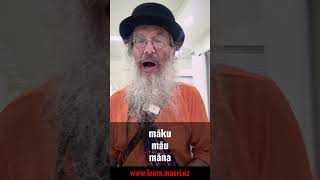
rāua - them; they (two people)
Rāua, pron. 3rd pers. dual. 1. They two, them two. Ka whakaae to raua whaea, ka piki raua ki runga ki te tuanui o te whare (T. 46).
2. When two persons are mentioned together raua is used after the first named to introduce the second, and is not translated. Ka haere a Te Kahureremoa raua ko tana
page 329
taurekareka (T. 144). Ka mate a Hou raua ko Whakaturia (T. 67). Hoatu hei kotutu wai rearea ma te Waru, kia inu raua ko tana kotiro (S.).
3. Used in addressing two persons at once. E Tama raua ko Maka!
Note.—Raua apparently = rārua. ‖ rā (iii).
Williams Dictionary
Ko Liam te mokopuna a Beverley rāua ko Denis.
Liam is the grandchild of Beverley and Denis.
Identity sentences - ko...
Ko Jim rāua ko Doug aku taokete.
Jim and Doug are my brother in laws.
Identity sentences - ko...
Ko Rāhera rāua ko Tipene ōna hoa.
Her friends are Rāhera and Tīpene.
Identity sentences - ko...
Ko Aroha rāua ko Pāora.
Aroha and Pāora.
Identity sentences - ko...
Ko Riripeti rāua ko Tīwana aku mokopuna.
Riripeti and Tīwana are my grandchildren.
Identity sentences - ko...
Ko Hone rāua ko Rāhera ōku hungawai.
Hone and Rāhera are my parents-in-law.
Identity sentences - ko...
He aha rāua i mārena ai?
Why did those two get married?
Why did? - He aha... i... ai?
Ehara ngā rangatira i a Moki rāua ko Tū-te-kawa.
Moki and Tū-te-kawa were not the chiefs.
Negations of identity sentences - ehara...
Ehara a Amaru rāua ko Mia i te mātua.
Amaru and Mia are not parents.
Negations of identity sentences - ehara...
Ehara rāua i te kaiwhakaako.
They are not teachers.
Negations of identity sentences - ehara...
Kei te kai rāua.
They're eating.
Simple sentences: present tense with a verb - kei te
Kei te hui a Rama rāua ko Pita ki te pātaka kōrero.
Rama and Pita are meeting in the library.
Simple sentences: present tense with a verb - kei te
Kei te kai rāua i ngā kūmara.
They are eating the kūmara.
Simple sentences: present tense with a verb - kei te
Kei te whakapakari tinana rāua ki te whare hākinakina.
Those two are exercising at the gym.
Simple sentences: present tense with a verb - kei te
Kei te hoki rāua ki te kāinga.
Those two are returning home.
Simple sentences: present tense with a verb - kei te
Kei te waiata rāua.
Those two are singing.
Simple sentences: present tense with a verb - kei te
Kei te haere a Ari rāua ko Taika.
Ari and Taika are going.
Simple sentences: present tense with a verb - kei te
E hui ana a Rama rāua ko Pita ki te pātaka kōrero.
Rama and Pita are meeting in the library.
Simple sentences: present tense - e... ana
E tākaro ana rāua i te papa tākaro.
They (two people) are playing at the playground.
Simple sentences: present tense - e... ana
E takoto ana rāua.
They're lying down.
Simple sentences: present tense - e... ana
E maumahara ana ahau ki tō rāua arunga e te kurī rā.
I remember them being chased by that dog.
Simple sentences: present tense - e... ana
I konei rāua i nanahi.
They were here yesterday.
Simple sentences: past tense - i
I waiata rāua i te hui?
Kāore rāua i waiata i te hui?
Simple sentences: past tense - i
I haere rāua i te tahataha awa.
They walked beside the river.
Simple sentences: past tense - i
I haere rāua ki te whare pikitia inanahi.
Those two went to the movies yesterday.
Simple sentences: past tense - i
Kua hoki mai rāua i te toa.
They have returned from the shop.
Simple sentences: past completed tense - kua
Kua tākaro rāua i te whutupaoro.
They have played rugby.
Simple sentences: past completed tense - kua
Me aha a Liam rāua ko Kaia?
What should Liam and Kaia do?
Simple sentences: you should - me
Me tiki atu rāua i a Pita.
Those two should fetch Pita.
Simple sentences: you should - me
Kei te āwhina rāua i a Rangi.
They (2) are helping Rangi.
Sentences with i - i
Ka tīmata rāua ki te horoi i te whare.
They have started to wash the house.
Sentences with i - i
Pēnei au kua wehe rāua, engari i kite au i a rāua e pupuri ringa ana, e whakaipoipo tonu ana i te tāone.
I thought they'd broken up, but I saw them holding hands and looking pretty loved up in town.
I thought mistakenly - Pēnei au...
Nō tō tāua taenga, ka tūpono ia e mau kaka rerehua ana rāua.
When they arrived, he realised that they were wearing fancy dress.
Belonging to the past - nō
Nō muri noa mai ka whānau mai ngā tamariki a Manu rāua ko Ani.
The children of Manu and Ani were born much later.
Belonging to the past - nō
Nō muri i te piringa o Rangi rāua ko Papa ka whānau mai ngā tamariki.
After the union of Rangi and Papa, the children were born.
Belonging to the past - nō
Nō te wā o te piringa o Rangi rāua ko Papa ka tupu te werawera, ka rērere te kohu.
At the time of the union of Rangi and Papa, the heat grew, the mist rose.
Belonging to the past - nō
Nō mua i te piringa ki a Rangi, ka moe a Papa rāua ko Tangaroa.
Before the union with Rangi, Papa was in a relationship with Tangaroa.
Belonging to the past - nō
Nō Taranaki rāua.
They are from Taranaki.
Belonging to a place - nō
Nō Ngāpuhi rāua.
They are from Ngāpuhi.
Belonging to a place - nō
Nō Ngāpuhi rāua.
The're from Ngāpuhi.
Belonging to a place - nō
Ehara mā rāua tēnei kāri.
This card is not for them.
Negating māku possessives - ehara... mā...; ehara... mā
Nā rāua i hanga te whare.
It was them (two) who built the house.
Past agent emphatic - nā - agent emphatic
Nā rāua i whakahoki ngā pukapuka.
It was them (two) who returned the books.
Past agent emphatic - nā - agent emphatic
Nā rāua i whawhai ki ngā pirihimana.
It was them (two) who fought with the police.
Past agent emphatic - nā - agent emphatic
Nā wai a Papa rāua ko Rangi i whakawehe?
Who separated Papa and Rangi?
Past agent emphatic - nā - agent emphatic
Mā rāua tēnei kāri.
This card is for them (two).
Unrealised possession - mā, māku
Mō Tame rāua ko tana tama.
For Tame and his son.
Unrealised possession - mā, māku
Mō tā rāua tama ērā hū.
Those shoes are for their son.
Unrealised possession - mā, māku
Mā rāua te motokā e taraiwa.
They (two) will drive the car.
Future agent emphatic - māku, mā... e..., mā... hei
Mā rāua ngā pukapuka e pānui.
They (two) will read the books.
Future agent emphatic - māku, mā... e..., mā... hei
Mā rāua te motokā e whakatika.
They (two) will fix the car.
Future agent emphatic - māku, mā... e..., mā... hei
Mā rāua te māra e whakatipu.
They (two) will tend to the garden.
Future agent emphatic - māku, mā... e..., mā... hei
Mā rāua.
Those two will.
Future agent emphatic - māku, mā... e..., mā... hei
Kei waenganui rāua i ngā tama.
They are among the boys.
In, on, by, under... - kei runga...
Kei roto a Kahurangi rāua ko Hōhepa i tō rāua whare.
Kahurangi and Hōhepa are inside their house.
In, on, by, under... - kei runga...
Kei roto a Niko rāua ko Moana i tō rāua whare.
Niko and Moana are inside their house.
In, on, by, under... - kei runga...
Kei roto rāua i te kīhini.
Those two are in the kitchen.
In, on, by, under... - kei runga...
Kei roto a Hera rāua ko Koa i tō rāua whare.
Hera and Koa are inside their (2x) house.
In, on, by, under... - kei runga...
Kei waenganui i rāua.
Inbetween them.
In, on, by, under... - kei runga...
I haere rāua mā runga pahi.
Those who travelled by bus.
Travelling by means of - mā runga
Kei te haere a Tame rāua ko Amaru mā runga i te motukā.
Tame and Amaru are travelling by car.
Travelling by means of - mā runga
Kitea rawatia ake rāua i runga i te maunga.
They were finally seen on the mountain.
Passive sentences - tikina...
Kei te hanga taiapa rāua.
They're building a fence.
Gerund phrases (fence building, bread baking, dishes washing...) - tunu parāoa...
Kua tuhi pūrongo rāua mō tā rāua haere.
They've written a report about their trip.
Gerund phrases (fence building, bread baking, dishes washing...) - tunu parāoa...
E whakatō kūmera ana a Pou rāua ko Hema, e tākaro ana he rōpu tamariki i roto i te māra.
Pou and Hema were planting kūmera, and a group of children were playing in the garden.
Gerund phrases (fence building, bread baking, dishes washing...) - tunu parāoa...
Ka taea rāua te haere ki te kura?
Are they (two) able to go to school?
I am able... - Ka taea e...
Ka taea rāua te mahi tahi.
They (two) are able to work together.
I am able... - Ka taea e...
Nā te makariri rāua i hoki ai.
They returned because of the cold.
The reason for an action - ...ai.
Nā te makariri rāua i hoki mai ai.
They came back because of the cold.
Going somewhere to do something there - ki reira … ai.
Kāore anō rāua kia tae mai.
They haven't yet arrived.
Negations of kua (I haven't yet...) - Kāore ano... kia...
Kāore anō rāua kia hoki mai i te toa.
They have not returned from the shop yet.
Negations of kua (I haven't yet...) - Kāore ano... kia...
Kāore anō rāua kia tākaro i te whutupaoro.
They have not played rugby yet.
Negations of kua (I haven't yet...) - Kāore ano... kia...
Ka āhei rāua te haere ki te toa.
They (two) are allowed to go to the store.
Allowed to do something - āhei
Kei te papa tākaro rāua.
Those two are at the playground.
Locatives (at the moment, something is somewhere) - kei te
Kei te aha rāua?
What are they doing?
What is happening at the moment? - kei te aha?
I a rāua te waka i te ata nei.
They had it this morning.
Locatives - past (something was somewhere) - i te
Kua pau te kai, kei te hoki te tokorua ki ō rāua kāinga.
The food has been consumed, the pair are returning to their homes.
Statives - mate, ngaro, mau...
Ka hoki te kōrero ki a Hotu i ruku rā i te punga o tō rāua waka.
The story returns to Hotu who had dived for the anchor of their canoe.
Ka used to indicate the past - ka
He mātua pai a Rangi rāua ko Kauri.
Rangi and Kauri are good parents.
Categorizing sentences - he
He kaiwhakaako rāua.
They (two) are teachers.
Categorizing sentences - he
E tata ana rāua ki Waikanae.
They were approaching Waikanae.
Using 'ki' to indicate direction towards something - ki
Kāore rāua e tākaro ana i te papa tākaro.
They are not playing at the playground.
Negations of e... ana... sentences - kāore... e... ana...
Nō rāua tērā waka.
That car belongs to them.
Established possession - nāku, nōku...
Nā tō rāua māmā tēnei.
This belongs to their mother.
Established possession - nāku, nōku...
No Kirikiriroa rāua.
They are from Hamilton.
Established possession - nāku, nōku...
Nā rāua ngā pukapuka e rua.
The two books belong to them.
Established possession - nāku, nōku...
Kei te kura ā raua tamariki.
Their children are at school.
Possessives - 'a' class - ā, tāku...
Ka piki ā rāua tamariki i te maunga āpōpō.
Their children will climb the mountain tomorrow.
Possessives - 'a' class - ā, tāku...
I moe tā tāua pēpi i te moenga o tā rāua pēpi.
Our baby slept in their baby's bed.
Possessives - 'a' class - ā, tāku...
Ko Hēmi rāua ko Aroha ōku hungarei.
Hēmi and Aroha are my inlaws.
Possessives - 'o' class - ō, tōku...
He kaumātua a Nikau rāua ko Taika no tērā marae.
Nikau and Taika are elders of that marae.
Possessives - 'o' class - ō, tōku...
Ko Honi rāua ko Rangi ō tātou tumuaki.
Honi and Rangi are our leaders.
Possessives - 'o' class - ō, tōku...
Ko Tawa tō rāua tungāne.
Tawa is their cousin.
Possessives - 'o' class - ō, tōku...
Kei te haere tō māua hoa ki te whare o tō rāua whaea.
Our friend is going to their mother's house.
Possessives - 'o' class - ō, tōku...
Hoake tātou ki tō rāua whare.
Let's go to their house.
Possessives - 'o' class - ō, tōku...
Kāore rāua i whāia e Nikau.
They were not chased by Nikau.
Negating passive sentences - Kāore... e...
Ko Teremoana rāua ko Tania ōku tuakana.
Teremoana and Tania are my older sisters.
Family relationships - older sibling of the same sex - tuakana
Āe, he tuākana ōku, ko Tawa, ko Koa ō rāua ingoa.
Yes, I do have older siblings, their names are Tawa and Koa.
Family relationships - older sibling of the same sex - tuakana
Ko Rāwinia rāua ko Tia ōku tēina.
Rāwinia and Tia are my younger sisters.
Family relationships - younger sibling of the same sex - teina
Āe, he tēina ōku, ko Mia, ko Hēmi ō rāua ingoa.
Yes, I do have younger siblings, their names are Mia and Hēmi.
Family relationships - younger sibling of the same sex - teina
Kāore ā rāua he ngeru.
They don’t have any cats.
I have no... - Kāore aku...
Kāore ā rāua pukapuka.
They don’t have any books.
I have no... - Kāore aku...
Kāore ō rāua waka.
They don’t have any cars.
I have no... - Kāore aku...
Kāore ā rāua tamariki.
They don’t have any children.
I have no... - Kāore aku...
He kuri ā rāua?
Do they have a dog?
Do you have any...? - He... ?
He tamāhine ā rāua.
Those two have daughters.
Do you have any...? - He... ?
He ngeru ā rāua.
They have cats.
Do you have any...? - He... ?
He pukapuka ā rāua.
They (two people) have books.
Do you have any...? - He... ?
He waka tō rāua.
They (two people) have a car.
Do you have any...? - He... ?
He tamariki ā rāua.
They (two people) have children.
Do you have any...? - He... ?
Ko Rāhera rāua ko Hone ōku tūpuna.
Rāhera and Hone are my ancestors.
Talking about more than one person - ...rāua ko..., rātou ko...
Ko Rongomai rāua ko Moana ōku mātua.
Rongomai and Moana are my parents.
Talking about more than one person - ...rāua ko..., rātou ko...
Kei te haere a Riria rāua ko Larisa ki konā
Riria and Larisa are going there (by you the listener).
Talking about more than one person - ...rāua ko..., rātou ko...
Kei mua a Miriama rāua ko Rehutai i te pahi.
Miriama and Rehutai are in front of the bus.
Talking about more than one person - ...rāua ko..., rātou ko...
E tākaro ana a Niko rāua ko Kauri.
Niko and Kauri are playing.
Talking about more than one person - ...rāua ko..., rātou ko...
Kei muri a Miriama rāua ko Rehutai i te pahi.
Miriama and Rehutai are behind the bus.
Talking about more than one person - ...rāua ko..., rātou ko...
Ko Manu te tamaiti kei waenganui i a Ataahua rāua ko Aria.
Manu is the child between Ataahua and Aria.
Talking about more than one person - ...rāua ko..., rātou ko...
Ko Aroha rāua ko Pāora kei te haere ki te tāone.
Aroha and Pāora are going to town.
Talking about more than one person - ...rāua ko..., rātou ko...
Ko Aroha rāua ko Timi ana mātua.
Aroha and Timi are her parents.
Talking about more than one person - ...rāua ko..., rātou ko...
Ko Isaac te tama a Phill rāua ko Angie.
Isaac is the son of Phill and Angie.
Talking about more than one person - ...rāua ko..., rātou ko...
Ko Chris te tama a Richard rāua ko Gin.
Chris is the son of Richard and Gin.
Talking about more than one person - ...rāua ko..., rātou ko...
Ko Ataahua te tamāhine a Pāora rāua ko Rina.
Ataahua is the daughter of Pāora and Rina.
Talking about more than one person - ...rāua ko..., rātou ko...
Ko Val te tamāhine a Una rāua ko Vic.
Val is the daughter of Una and Vic.
Talking about more than one person - ...rāua ko..., rātou ko...
Kei te hui a Ari rāua ko Taika ki te pātaka kōrero.
Ari and Taika are meeting in the library.
Talking about more than one person - ...rāua ko..., rātou ko...
I hea a Retitia rāua ko Mihinui?
Where were Retitia and Mihinui?
Talking about more than one person - ...rāua ko..., rātou ko...
I hea a Miti rāua ko Auau?
Where were Miti and Auau?
Talking about more than one person - ...rāua ko..., rātou ko...
Ko Tai rāua ko Moana ngā ingoa o ōku hoa.
The names of my friends are Tai and Moana.
Talking about more than one person - ...rāua ko..., rātou ko...
Ko Moki rāua ko Tū-te-kawa ngā rangatira.
Moki and Tu-te-kawa were the chiefs.
Talking about more than one person - ...rāua ko..., rātou ko...
He hoa piritahi rāua ko Rāwiri.
He and Rāwiri are best friends.
Talking about more than one person - ...rāua ko..., rātou ko...
Ko Timi rāua ko Jen aku mātua.
Timi and Jen are my parents.
Talking about more than one person - ...rāua ko..., rātou ko...
Ko Pita te mokopuna a Ari rāua ko Aria.
Pita is the grandchild of Ari and Aria.
Talking about more than one person - ...rāua ko..., rātou ko...
Ko ia te mea hangareka o rāua ko Riripeti, tōna tuahine.
She is the funny one between her and Riripeti, her sister.
Talking about more than one person - ...rāua ko..., rātou ko...
Ko Ani rāua ko Mere.
Ani and Mere.
Talking about more than one person - ...rāua ko..., rātou ko...
Ko Mere rāua ko Lennon āku tamariki.
Mere and Lennon are my children.
Talking about more than one person - ...rāua ko..., rātou ko...
Ko Barry rāua ko Lynne ōku mātua.
Barry and Lynne are my parents.
Talking about more than one person - ...rāua ko..., rātou ko...
Ko Mia rāua ko Ani ōku tuāhine.
Mia and Ani are my sisters.
Talking about more than one person - ...rāua ko..., rātou ko...
Ko Amaru rāua ko Moana ngā mātua o Manu.
Amaru and Moana are the parents of Manu.
Talking about more than one person - ...rāua ko..., rātou ko...
Ko Tame rāua ko Kauri ngā mokopuna o Niko rāua ko Aroha.
Tame and Kauri are the grandchildren of Niko and Aroha.
Talking about more than one person - ...rāua ko..., rātou ko...
Ko Rangi rāua ko Ataahua ngā hoa o Hēmi rāua ko Rina.
Rangi and Ataahua are the friends of Hēmi and Rina.
Talking about more than one person - ...rāua ko..., rātou ko...
I hiahia a Rangi rāua ko Hera ki te tūtaki i a rāua anō.
Rangi and Hera wanted to meet each other.
Talking about more than one person - ...rāua ko..., rātou ko...
Ko Billy rāua ko Bob ā rāua māhanga.
Their twins are Billy and Bob.
Talking about more than one person - ...rāua ko..., rātou ko...
Ko Brooklyn te mokopuna a Lynne rāua ko Barry.
Brooklyn is the grandchild of Lynne and Barry.
Talking about more than one person - ...rāua ko..., rātou ko...
Koa rāua ko tōna hoa.
Koa and her friend.
Talking about more than one person - ...rāua ko..., rātou ko...
Ko Sally rāua ko Tīmoti ōku mātua.
My parents are Sally and Timoti.
Talking about more than one person - ...rāua ko..., rātou ko...
Ko Jacob rāua ko Hana āku tamariki.
Harnah and Jacob are my children
Talking about more than one person - ...rāua ko..., rātou ko...
Ko Brian rāua ko Fran ōku mātua
Brian and Fran are my parents
Talking about more than one person - ...rāua ko..., rātou ko...
I muri i te piringa o Rangi rāua ko Papa ka whānau mai ngā tamariki.
After the union of Rangi and Papa the children were born.
Talking about more than one person - ...rāua ko..., rātou ko...
Ko Tame rāua ko Amaru ō tāua hoa.
Tame and Amaru are our friends.
Talking about more than one person - ...rāua ko..., rātou ko...
Ko Hana rāua ko Jacob
Harnah and Jacob
Talking about more than one person - ...rāua ko..., rātou ko...
Ko Tanya rāua ko Sarah
Tanya and Sarah
Talking about more than one person - ...rāua ko..., rātou ko...
Ko Aidan rāua ko Liam
Aidan and Liam
Talking about more than one person - ...rāua ko..., rātou ko...
Ko Kayte rāua ko Denis, ko Beverley
Kayte and Denis and Beverley
Talking about more than one person - ...rāua ko..., rātou ko...
Kei te tangi a Mereana rāua ko Paul.
Mereana and Paul are crying.
Talking about more than one person - ...rāua ko..., rātou ko...
Kei te haere a Raureka rāua ko Te Naera.
Raureka and Te Naera are going.
Talking about more than one person - ...rāua ko..., rātou ko...
Kei te katakata a Honi rāua ko Rangi.
Honi and Rangi are laughing.
Talking about more than one person - ...rāua ko..., rātou ko...
Kei te kanikani a Tawa rāua ko Nikau.
Tawa and Nikau are dancing.
Talking about more than one person - ...rāua ko..., rātou ko...
Ko Rāwiri rāua ko Tūmanako aku tama.
Rāwiri and Tūmanako are my sons.
Talking about more than one person - ...rāua ko..., rātou ko...
Kei te moe a Angie rāua ko Raiha.
Angie and Raiha are sleeping.
Talking about more than one person - ...rāua ko..., rātou ko...
Ko Flo rāua ko Rāwiri ōku kaumātua.
Flo and Rāwiri are my grandparents.
Talking about more than one person - ...rāua ko..., rātou ko...
Ko Hone rāua ko Rāhera ōku mātua.
Hone and Rāhera are my parents.
Talking about more than one person - ...rāua ko..., rātou ko...
Ko Rāwiri rāua ko Tūmanako ōku tungāne.
Rāwiri and Tūmanako are my brothers.
Talking about more than one person - ...rāua ko..., rātou ko...
Kei te ako a Mia rāua ko Hēmi i ngā kupu whānau i te reo Māori.
Mia and Hēmi are learning Māori 'family' words.
Talking about more than one person - ...rāua ko..., rātou ko...
Ko Riripeti rāua ko Tīwana ā māua tamariki.
Riripeti and Tīwana are our children.
Talking about more than one person - ...rāua ko..., rātou ko...
Arā, ko au te tama a Hone rāua ko Rāhera.
That is, I am the child of Hone and Rāhera.
Talking about more than one person - ...rāua ko..., rātou ko...
He mātua a Pani rāua ko Hata,.
Pani and Hata are parents.
Talking about more than one person - ...rāua ko..., rātou ko...
Ko Tīwana rāua ko Riripeti aku irāmutu.
Tīwana and Riripeti are my nieces/nephews.
Talking about more than one person - ...rāua ko..., rātou ko...
Ko Hone rāua ko Rāhera ōku mātua
Hone and Rāhera are my parents.
Talking about more than one person - ...rāua ko..., rātou ko...
Kua tūtaki au ki a Nikau rāua ko tana hoa wahine, ko Aria.
I have met Nikau and his girlfriend, Aria.
Talking about more than one person - ...rāua ko..., rātou ko...
Ko Riripeti rāua ko Tīwana āku irāmutu.
Riripeti and Tīwana are my nieces/nephews.
Talking about more than one person - ...rāua ko..., rātou ko...
Ko Rāwiri rāua ko Tūmanako ōku taokete.
Rāwiri and Tūmanako are my twins.
Talking about more than one person - ...rāua ko..., rātou ko...
Haere tonu rāua, me te whai atu anō a Ponga i muri tata.
They went on with Ponga following close behind.
Direction markers with adverbs - tonu mai, kā atu, rawa mai...
Ehara i tō rāua māmā tēnei.
This does not belong to their mother.
Negating nāku possessives - Ehara i...
Ehara rāua nō Taranaki.
They are not from Taranaki.
Negating nāku possessives - Ehara i...
Ehara rāua nō Ngāpuhi.
They are not from Ngāpuhi.
Negating nāku possessives - Ehara i...
Ehara i a rāua ngā pukapuka e rua.
The two books do not belong to them.
Negating nāku possessives - Ehara i...
Kāore a Niko rāua ko Kauri i runga i te atamira.
Niko and Niko are not on the stage.
*Negating locatives - kāore... i runga...
Ehara mā rāua te motokā e taraiwa.
They (two) won’t drive the car.
Negating the future agent emphatic - ehara mā..
Ehara mā rāua ngā pukapuka e pānui.
They (two) won’t read the books.
Negating the future agent emphatic - ehara mā..
Ehara mā rāua te motokā e whakatika.
They won’t fix the car.
Negating the future agent emphatic - ehara mā..
Ehara mā rāua te māra e whakatipu.
They won’t tend to the garden.
Negating the future agent emphatic - ehara mā..
Kei te moe tonu pea, pērā i tō rāua pāpā.
They are probably still sleeping, just like their father.
Like this, like that - pēnei, pēna, pēra
Ka kōrero a Toto, ki ana kōtiro, mehemea e pai rāua ki te moe tāne.
Toto asked his daughters if they wanted husbands.
If (using mehemea) - mehemea, mehe, mēnā
Ka kōrero a Toto ki ana kōtiro, mehemea e pai rāua ki te moe tāne.
Toto asked his daughters if they wanted to get married.
If (using mehemea) - mehemea, mehe, mēnā
A kōrero ana rāua mō te rā e haere ai rāua.
And they talked about the day when they would leave.
About someone - mōku, mōu, mōna...
He pai ki a rāua ngā pukapuka o te whare.
They (two) like the books in the house.
I like... - He pai ki a au...
Kāore rāua e taea te haere ki te kura?
Are they (two) unable to go to school?
To be unable - Kāore... taea...
Kāore rāua e taea te mahi tahi.
They are unable to work together.
To be unable - Kāore... taea...
Ehara i a rāua te whare i hanga.
They didn’t build the house.
Negating the past agent emphatic - ehara i...
Ehara i a rāua ngā pukapuka i whakahoki.
They didn’t return the books.
Negating the past agent emphatic - ehara i...
Ehara i a rāua ngā pirihimana i whawhai.
They didn’t fight with the police.
Negating the past agent emphatic - ehara i...
I a Spongebob rāua ko Patariki e tītoitoi ana i te Krusty Krab ka pararē a Squidward ki a rāua.
While Spongebob and Patrick were goofing off at the Krusty Krab, Squidward yelled at them.
While... - i... e... ana, ka...
Kāore ā rāua he kuri?
Do they not have a dog?
Do you not have any? - Kāore āu...
Ehara ngā pukapuka o te whare i te pai ki a rāua.
They do not like the books in the house.
I don't like... - Ehara... i te pai...
Kāore rāua e āhei te haere ki te toa.
They are not allowed to go to the store.
Not allowed - kāore... e āhei
Ka kōrero ā rāua mokopuna.
Their (2 people) grandchildren are talking.
Noho atu ana tētahi, noho mai ana tētahi, i tētahi taha, o tā rāua ahi.
They sat opposite one another on either side of their fire.
Kei te noho rāua.
They're staying.
I harihari ia i tō rāua tūtatakitanga.
He was glad at their meeting.
Ka haere a Hōhepa ki Hiruhārama kia tuhituhia ai rāua ko tāna wahine ko Mere.
Joseph set out for Jerusalem in order that he and his wife Mere might be registered (written down).
Ko Hine rāua ko Mere ngā kaiako i haere ki te Whare Wānanga
Hine and Mere are the tutors who went to the University
I roto rāua ko Mere i te whare.
He and Mere were in the house.
Hei tēra Mane rāua tae mai ai, arā, hei te 2 o Pepuere
They arrive next Monday, that is, on the 2nd of February
Kāhore he rangimarie i tō rāua tūtatakitanga.
He greeted her without warmth.
Nō muri i a Tāriana Tūria rāua ko Pita Sharples, ko Te Ururoa Flavell rāua ko Mārama Fox.
After Tāriana Tūria and Pita Sharples came Te Ururoa Flavell and Mārama Fox.
Nā rāua tēnei pukapuka.
This book is theirs (those two).
Ka tonoa e ia a Pita rāua ko Hoani kia mea, “Tikina te hapa mā tātou kia kai ai, kia inu ai.
He gave instructions to Pita and Hoani saying, “Fetch supper for us so that we may eat and drink.
Ka haere rāua.
They went.
Kei te pai rāua.
Those two (not us) are okay.
Kei te whakangau poaka rāua.
They are pig hunting.
Ko Mere rāua ko Erihapeti ō tātou tumuaki.
Our leaders are Mere and Erihapeti.
Waha ana e ia ki tō rāua whare, ka horoia ōna patunga.
She carried him to their home and bathed his wounds.
Mā rāua tēnei pukapuka.
This book will be theirs (those two).
I tunu keke a Hone rāua ko Mere mā rāua anō.
John and Mary baked cakes for themselves, or for each other.
He mātua pai a Pani rāua ko Hata
Pani and Hata are good parents.
I taua rā anō ka haere rāua.
On that exact (precise) day they set off (On that very day they set off).
No Ōpōtiki rāua.
(They are from Opotiki.)
Nā rāua ngā pēpi i moe ai.
Those two were the reason the babies slept.
Kua oti tō rāua motukā i a rāua te horoi.
They have finished washing their car.
Mā tana hoa rāua e kawe ki te mahi.
Her friend will take them to work.
Pau katoa ana te pō i a rāua e kanikani tahi ana.
They spent the whole night dancing together.
He aha rāua i piri ai?
Why were those two together?
Kāhore ō rāua whare.
They have no house (houses).
I ngā Paraire haere ai rāua ki ngā toa
On Fridays they usually go to the shops
Kei te tākaro rāua ki konā
They (2) are playing there near you.
I noho rāua i te kāinga.
They lived at the place.
Ko Mere te tuahine o Mārama rāua ko Tamahae.
Mere is Mārama’s and Tamahae’s cousin.
Ko Rewi tō rāua tungāne.
Rewi is their cousin.
Kua haere rāua ki te kāinga.
They have gone to the village.
Ko rāua aku hoa.
They are my friends.
Ka kai ahau i tā rāua keke
I will eat the cake that belongs to those two
Ka whai haere rāua i ahau ahakoa haere ahau ki hea.
They followed me no matter where I went.
ia rāua rātou
It seems to be often the distinction in the 1st person, between ‘inclusive’ and ‘exclusive
E titiro ana rāua ki etahi nūpepa tawhito.
They are looking at some old newspapers.
He whare tō rāua.
They have a house.
Tō rāua He whare hou tō rāua
Those two have a new house
Ko Hōri rāua ko Ani ōku hungarei.
Hōri and Ani are my in-laws.
Ehara i a māua te kai i tunu. Nā tō rāua irāmutu i tunu.
It wasn't us two who cooked the food. It was their nephew.
Noho tonu, kai tonu, moe tonu ai au i a rāua. (Pōtatau 1991:26)
I lived, ate and slept with them.
Kei te oma ō raua hōiho
Our horses are running
tō rāua ā rāua ō rāua
Our — three or more, inclusive
Kei te haere a Rangi rāua ko Hemi ki te papa tākaro.
Rangi and Hemi are going to the playground.
Ko Brian rāua ko Fran ōku mātua.
Brian and Fran are my parents.
Arā rāua!
There those two are!
Ko Pere te ingoa o tā rāua ngeru.
Their cat’s name is Pere.
Ko Mia rāua ko Ani ngā tamāhine a Moana.
Mia and Ani are daughters of Moana.
He kaumātua a Hōri rāua ko Ani no tērā marae.
Hōri and Ani are elders of that marae.
Kei te moe tā rāua pēpi.
Their baby is sleeping.
Mā rāua ngā pipi e kohikohi
They will gather the pipi
Kei te kura ā rāua tamariki.
Their children are at school.
Māna rāua e tiaki.
He/She will look after them.
Nā rāua tēnei pene.
This pen belongs to those two.
He aha tā rāua e rapu nā?
What are those two looking for?
Tō rāua taenga atu
Their arrival
Nā wai rāua i tiaki?
Who looked after them?
He aha tā rāua e tunu rā?
What are those two cooking?
Ko te tamaiti kēkē a Rangi rāua ko Hēra.
She is the niece of Rangi and Hēra.
Nā Rangi rāua ko Mere tēnei pene.
This pen belongs to Rangi and Mere.
Nāna rāua i tiaki
He/She looked after them
He pūrotu rāua.
They're handsome.
Kei te waiata a Rob rāua ko Lily
Rob and Lily are singing. Becomes;
Ko Piripi rāua ko Miriama ōku mātua.
Piripi and Miriama are my parents.
I waiata rāua tētahi ki tētahi.
They sang to each other (one to another).
Kāore a Rob rāua ko Lily i te waiata
Rob and Lily are not singing.
Kei te mahi tahi a Hau rāua ko Haora.
Hau and Haora are working together.
He tino ora tā rāua pāmu.
Their farm is very productive.
Kei te huna rāua.
They're hiding.
Kei te hī ika rāua.
They (those two) are fishing.
I mātua haere rāua ki tō rāua matua.
They went first to their father.
Ko Pita rāua ko Paul.
Pita and Paul.
He aha rāua i kōrero ai?
Why did they talk?
He miraka kau tā rāua mahi.
Milking cows is their job.
nā Rangi rāua ko Mere
Rangi and Mere arethe reason
He aha rāua e kōrero ai?
Why will those two talk?
He aha rāua e kōrero nei?
Why are those two talking?
Kua haere a Te Kara rāua ko Alex ki te hahau pōro
Te Kara and Alex have gone to play golf
Ā tokorua ā rātou i whakarite ai, ko Hohepa rāua ko Matiaha.
And two of them were therefore proposed (put forward for selection), Hohepa and Matiaha.
mā Rangi rāua ko Mere
Rangi and Mere will bethe reason
Kua moe rāua?
Have they (three people) gone to the shop?
E umere ana tō rāua pāpā
Their father shouting
Ko Hēra rāua ko Ruku ō tāua hoa.
Hera and Ruku are our friends.
Ka whakatika rāua.
They stood up.
Mō rāua te whare
The house is for them
Ka huaina tā rāua tama ko Hēnare
Their son was called Hēnare
Ko Juliet rāua ko Jessica ōku teina
Juliet and Jessica are my younger sisters (speaker is female)
Kātahi ka karakia paku a Kupe kia rapa te punga o tō rāua waka ki raro kia kaua e taea.
Then Kupe silently cast a spell so that their canoe’s anchor would be caught underwater, so that it could not be pulled up.
Ko Ashley rāua ko Nicole aku taokete
Ashley and Nicole are my sisters-in-law (speaker is female)
He pai tā rāua tākaro ataata hou!
Their new video game is awesome!
Raua ō taputapu ki roto i tō pēke.
Put your gear in your bag.
Kua mate tō rāua kuia
Their grandmother has passed away
I tūtaki ahau ki tētahi hoa o rāua.
I met a friend of theirs.
Ka aha rāua?
What will they do?
Ko Miriama, ko Rex, ko Tai ā rāua tamariki
Miriama, Rex and Tai are their children
Ka noho rāua.
They will stay.
Kei tawhiti ō rāua marae
Their marae are far away
Na Hata rāua ko Pani.
(They’re Hata’s and Pani’s.)
Kei te tangi ia, me te mea nei kua wehe rāua ko tana hoa tāne.
She is crying as if she has broken up with her boyfriend.
Ko au tā rāua tamāhine.
I am their daughter.
Ehara a Mere i tō rāua whaea.
Mere is not their mother.
E kai ana rāua i ngā keke.
They are eating the cakes.
Tokohia ā rāua tamariki
How many children do they have? (literally ‘How many their children?
Ehara a Matiu i tō rāua kaiwhakaako.
Matiu was not their teacher.
Raua ki tō kōpaki.
Put it in your folder.
Ki ō rāua whakaaro.
In their (2) thinking / In their view.
mā/mō Rangi rāua ko Mere
for Rangi and Mere
Ka haere rāua ki tāwāhi ā tēnei Rāhina.
They're going overseas on Monday.
Ka tae mai rāua ki Ōtautahi.
They arrived (here where I am) in Christchurch.
Ka tae atu rāua ki Ōtautahi.
They arrived (there) in Christchurch.
Ko Jim te tama a Neha rāua ko Irene.
Jim is the son of Neha and Irene.
Mahue ake i a rāua tō rāua matua.
Then and there they left their father.
Kei te moe tonu rāua ko tōna pera!
He's still sleeping with his pillow.
I whaiwāhi atu hoki a Tamahea rāua ko Pita ki te whakataetae
Tamahea and Pita also took part in the competition
Kei te mōhio koe ko wai ngā ingoa o ā rāua tamahine?
Do you know what (are) the names of their daughters?
Kei te whāwhai atu rāua ki waho kia tīkina ngā kākahu horoi.
They are rushing outside to fetch the washing.
Ka tae rāua ki reira ka waiho te tamaiti rā a Kape-taua e Tara-kumikumi i aua toka rā noho ai.
When they reached there, that child, Kape-taua, was left to stay on that rock by Tara- kumikumi.
I konei rāua i nanahi
They (two) were here yesterday
Ka haere rāua i te taha tonu o te pahi.
They walked past the bus.
Ka tupu te raruraru i waenganui i ngā tohunga nei, i a Nukutawhiti rāua ko Ruanui.
Trouble arose between these two experts, Nukutawhiti and Ruanui.
Mā Rangi rāua ko Mere e waiata.
Rangi and Mere will be the ones to sing.
Kua wehe rāua i te rōpū matua.
They have separated from the parent organisation.
Kāo, kāhore ā rāua tamariki.
No, they have no children.
Ehara mā Rangi rāua ko Mere e waiata.
Rangi and Mere will not be the ones to sing.
Ko Raureka rāua ko Tūhawaiki ngā mātua.
Raureka and Tūhawaiki are the parents.
Ko te whakaaro i oti nei i a rāua me haere rāua ki te pā o Uenuku rāua ko Toi ka muru mai i ngā hua o te poroporo o Uenuku (Biggs, Hohepa, Mead 1967:41)
The plan they devised was that they should go to Uenuku and Toi’s pā and steal the fruit of Uenuku’s poroporo
He pai rāua ko tana hoa ki te waiata.
She and her friend are good singers.
Kāhore kau he kupu a rāua ki a rāua.
They did not say a single word to each other.
He ākonga rāua.
They are both students.
Kei te kai rāua i ngā kūmera.
They (2) are eating the kūmera.
Taku kitenga i a rāua i nanahi, i te tautohetohe rāua.
When I saw them yesterday, they were quarrelling.
Ehara rāua i te ākonga.
They are not students.
Kua horoi rāua i te whare.
They have washed the house.
Taku kitenga i a rāua i nanahi, i te tautohetohe rāua
When I saw them yesterday, they were quarrelling
Mere rāua ko tōna hoa
Mary and her friend
Āe, he tuāhine ōku, ko Kauri, ko Aroha ō rāua ingoa.
Yes,I do have sisters, their names are Kauri and Aroha.
Tokohia ā rāua tamariki?
How many children do they have?
Tokorima ā rāua tamariki.
They have five children.
Kāhore rāua e mahi ana
they are not working
Āe, he tungāne ōku, ko Taika, ko Tawa ō rāua ingoa.
Yes, I do have brothers, their names are Taika and Tawa.
Āe, he tamāhine āku, ko Ataahua, ko Rina ō rāua ingoa.
Yes, I have daughters, their names are Ataahua and Rina.
I runga a Peni rāua ko Peti i te atamira
Peni and Peti were on the stage.
Kei hea rāua?
Where are those two?
Kei te haere a Riria rāua ko Larisa ki konā.
Riria and Larisa are going there, near you.
Āe, he tamatāne āku, ko Koa, ko Pāora ō rāua ingoa.
Yes, I have sons, their names are Koa and Pāora.
A te raumati, ka haere aku tamariki ki tō rāua kuia.
In summer (coming) my children will go to their grandmother.
Hoatu ēnei mea ki a Rangi rāua ko Hari
Give these things to Rangi and Hari
Ko ōku hoa tokorua ngā tangata mā rāua ahau e āwhina
My two friends are the people who will help me
Kei a rāua ngā tauera
They have the towels
tō rāua whare
their (2) house
ō rāua whare
their (2) houses
Kei te wehe rāua.
Those two are going.
Ko tā rāua nei mahi tākaro he whakatangitangi pūtorino.
Their hobby was flute-playing.
Kei te haere raua ki te hīkoi akuanei
They are going for a walk soon.
rāua ko
those two
Nā, karanga tonu atu ia i a rāua.
Well then, he called them right away
Ko Aidan rāua ko Kaia
Aidan and Kaia
Tā rāua tamaiti.
Their child (two people, one child).
I tata tonu tō rāua whare ki te whare karakia.
Their house was quite close (near) to the church.
He mātua a Pani rāua ko Hata.
Pani and Hata are parents.
Ko te whare i haere ai a Ihenga rāua.ko Rongomai, me tō.rāua hokowhitu.
It was the house that Ihenga and Rongomai went to, together with their followers.
Ehara a Pani rāua ko Hata i te mātua.
Pani and Hata are not parents.
Ko te whare tēnei i haere ai a Ihenga rāua.ko Rongomai, me tō.rāua hokowhitu
and their army This was the house that Ihenga and Rongomai went to, together with their followers.
Ko Ponga koā rāua ko Puhihuia i noho kau noa iho, hore he kupu, hore he aha.
Ponga and Puhihuia, however, just sat, without a word, without anything.
Ka haere a Pango ki.te tūtaki ki a rāua.
Pango went to meet them.
Kei tātahi rāua e kaukau ana.
The two of them are swimming at the beach.
Kua kai tā rāua tamāhine i āna rīwai.
Their daughter has eaten her potatoes.
He āhua mate tō rāua whaea, heoi ka haere atu rātou katoa ki tātahi.
Their mother was a little ill, however they all set off to the beach.
Ngā pukapuka ā tā rāua tamaiti.
Their children's books.
I hoki mai rāua mā te mākū.
They returned on account of the damp.
Nō tōna kitenga i a Peta rāua ko Hoani meake tomo ki te temepara, ka tono ia i tētahi mea māna.
When he saw Peta and Hoani soon to enter the temple, he requested something for himself.
Ka tiki rāua i ngā harore.
Those two will collect mushrooms.
Te kai a ā rāua kurī.
Their dogs' food.
Kei te haere rāua ki hea?
Towards where are those two going?
Ko Mere rāua ko Monica ngā wāhine i haere ki Te Awamutu
Mere and Monica are the women who went to Te Awamutu
Kei te haere rāua ki te papa tākaro.
Those two are going to the playground.
Mā rāua te waka e whakairo.
They will carve the canoe.
Mō rāua te wai nei.
The water is for them.
Ka ako rāua.
Those two will learn.
He tāu raua ki te kanikani
Those two are awesome dancers
i a rāua.
Yes, let’s kill them.
E tata ana rāua ki Tāmaki-makau-rau.
They were approaching Auckland.
Kei te haere rāua.
Those two are going.
Kei te haere a Raureka rāua ko Te Naera ki te papa tākaro.
Raureka and Te Naera are going to the playground.
Ka kōrero tā rāua mokopuna.
Their (2 people) grandchild is talking.
Kāore a Peni rāua ko Peti i runga i te atamira.
Peni and Peti are not on the stage.
Kei te haere rāua ki ngā papa tākaro.
Those two are going to the playgrounds.
Ka moe rāua i te one.
They (2) are going to sleep on the beach.
I a rāua te waka i te ata nei
They had it this morning.
Ka haere rāua ki Kaingaroa noho ai.
They went to Kaingaroa to live there.
E mahi ana rāua.
Those two are working.